


Release on October 28th of 2014 HTML5 has been with us for some time now and many people are looking forward to HTML6 and what the possibilities may include. In this article we look at some of the more popular predictions by several software providers and magazine writers.

1. Automatic Image Resizing in the Browser: The issue at hand is ‘how many pixels does an image need to look good on a screen’? This varies with each image, each platform and the window size of each device. Part of the problem is the standard <img> tags and the SRC. The challenge is for the HTML protocol to determine when to increase/decrease image sizes for the best viewing result. Unfortunately, each <img> tag only works with one image.
One option is to make use of srcset, which allows the browser to choose between different images, but that increases overhead in terms of using multiple images.
HTML6 code sample from ‘A Look into HTML6’
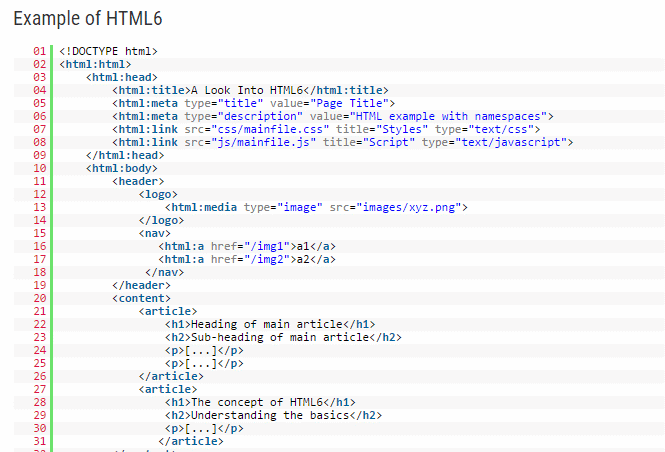
2. Express Tags: These are tags such as <logo></logo> for the log on your pages, or something like <navigation></navigation>, <sidebar></sidebar>, etc. In addition to this, instead of having to write something like <div id=’container’>, you could just write <container>.
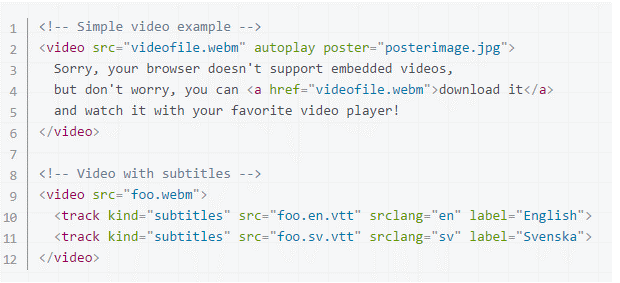
Here is a current sample of the code for HTML5 video.
3. Additional Control over the Video Object: Some of the features that users are looking for are how the video frames display on a page, callback hooks and synchronization mechanisms. All of these will improve the video experience.
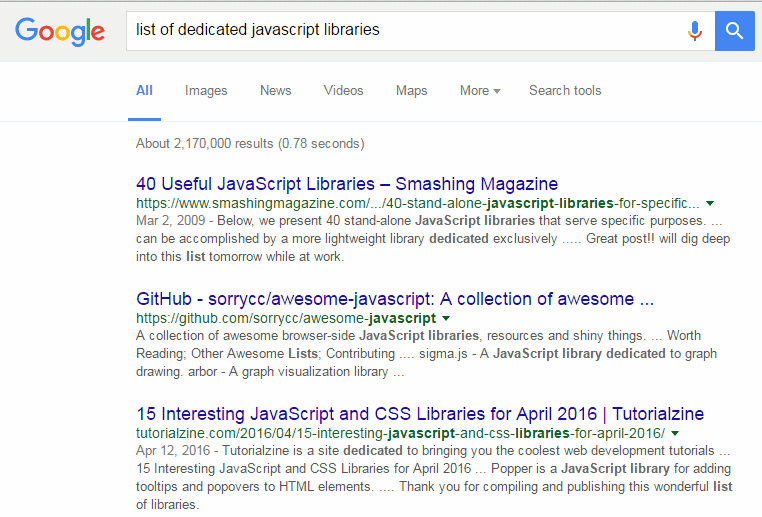
4. Dedicated Libraries: jQuery is used with JavaScript libraries, however the amount of energy necessary to load these libraries is high, especially if these are offsite. The solution is a cacheable version. If many designers want to use a specific library, the effect can be diffused with the browsers. Developers are hoping for a new HTML solution.
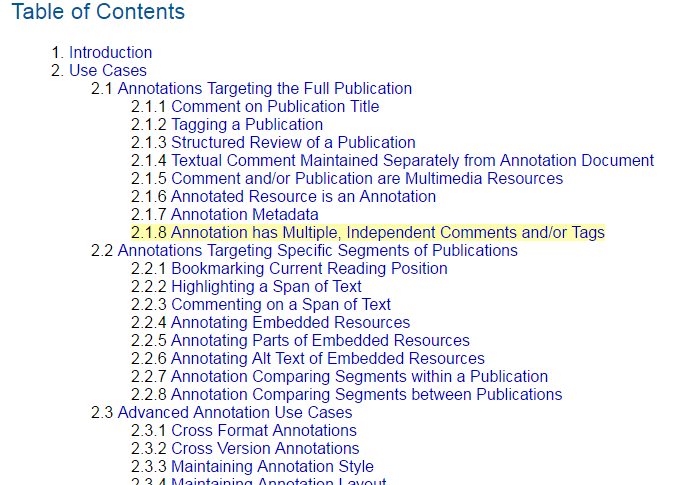
5. More Annotation Options: HTML structure supports annotation with paragraphs, sentences, words, etc. Developers also want the ability to annotate images and videos.
Standardizing this system would be a wise approach. That way, all websites and browsers offer annotations equally. The W3C has a group studying this and they are offering some recommendations.
6. Integrated Camera: The camera is an important part of our interactions, at home, on a tablet or cellphone. HTML6 will allow us to access all media content on our devices and repurpose it in a variety of ways, whether that’s through the browser, forms, or other systems. HTML6 could offer more control over the camera such as how images are captured, on-the-fly filtering, effects and more. Another option would be to allow for multiple formats for both video and photography and the ability to easily create panoramic images, HDR, etc.

7. Stronger Authentication. While authentication exists, browsers could offer more. Some examples would be making use of encryption with keys stored off-site to prevent people from gaining access. One option so to create better digital signatures. Another option is to use embedded keys, rather than cookies.
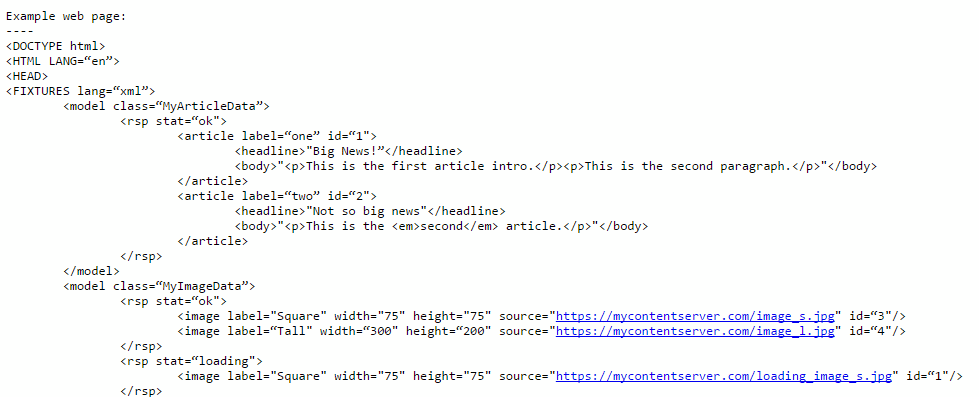
8. HTML6 proposal for Single-Page Apps without Javascript: This idea was submitted by Bobby Mozumder, Editor-in-Chief of FutureClaw Magazine. Here’s what he had to say: “There’s a standard design pattern emerging via all the front-end JavaScript frameworks where content is loaded dynamically via JSON APIs. This is the single-page app web design pattern. Everyone’s into it because the responsiveness is so much better than loading a full page – 10-50ms with a clean API load vs. 300-1500ms for a full HTML page load. My goal would be a high-speed responsive web experience without having to load Javascript.”
“This could probably be done by linking anchor elements to JSON/XML (or a new definition) api endpoints, having the browser internally load the data into a new data structure, and the browser then replaces DOM elements with whatever data that was loaded as needed. The initial data (as well as standard error responses) could be in header fixtures, which could be replaced later if desired.”
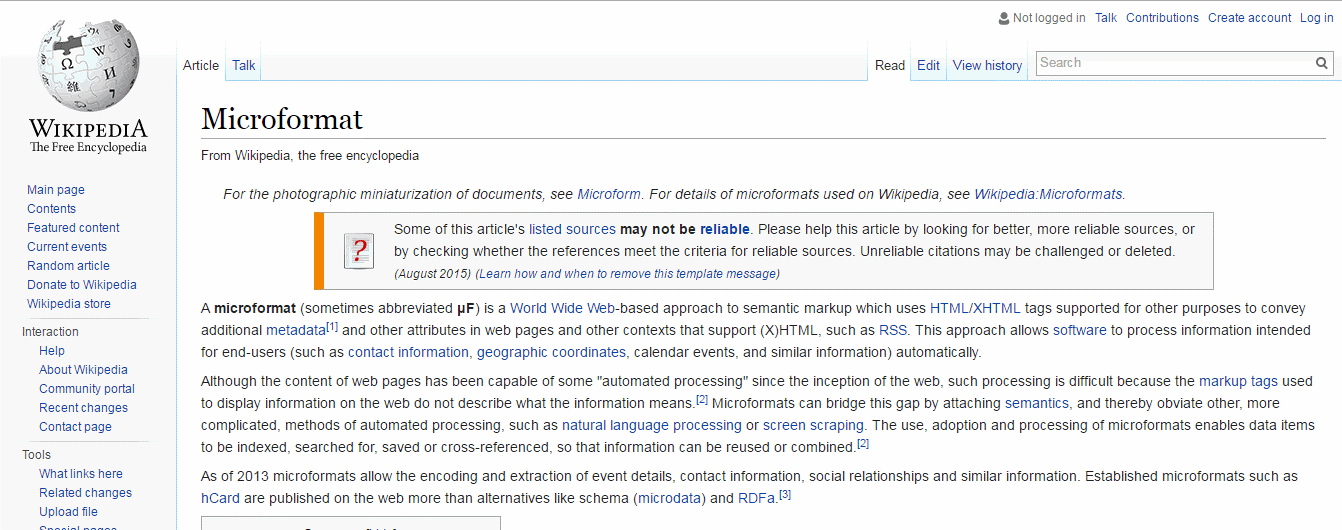
9. Stronger Micro-formats: Micro-formats are a standard used to define general information such as an address or phone number. This would make it easier for search engines to find your information. Developers can create detailed information for locations, dates, times, products, etc.
Other Feature Requests
Some other feature requests/ideas are:
· CSS4 for more graphics control
· Bluetooth support
· Cloud storage options
· Peer to peer file transfer abilities
· Being able to connect to other users through voice and chat system
· Malware protection built-in
